Infrastructure
Site Selection AssistanceFocus Central Pennsylvania is a resource to assist project teams in understanding infrastructure capacity in Central Pennsylvania. This involves evaluating whether a property has transportation access, utility capacity, and public services needed to support a proposed industrial or commercial project.
Because infrastructure is site specific having one or two short listed sites is required to provide the most accurate and responsive information for a project team. In addition to having a short list of site addresses or GPS coordinates, having as much of the information below, specific to your project is important:
⚡ Utility & Energy Demands
• Electrical Load: Total peak demand in kilowatts (kW) or megawatts (MW), requested voltage levels, and whether redundant power feeds (for backup) are required.
• Natural Gas: Peak and average consumption volumes (typically in MCF or MMBtu), minimum delivery pressure, and whether service must be firm (uninterrupted) or interruptible.
• Water Supply: Average daily use and peak flow rates (gallons per minute), along with specific water quality or pressure requirements.
🧪 Waste & Environmental Impact
• Wastewater Discharge: Daily volume of effluent and its chemical composition (BOD, COD, total suspended solids, pH levels, and heavy metals) to ensure the local treatment plant can handle it.
• Solid & Hazardous Waste: Estimated volumes and classifications of waste generated that will require municipal or specialized disposal infrastructure.
🚛 Logistics & Logistics Infrastructure
• Traffic & Fleet Impact: Expected daily volume of inbound and outbound commercial trucks (including size/weight configurations) to check local road weight limits and intersection capacities.
• Rail Requirements: If applicable, specific needs for a rail spur, including annual carload estimates, car types, and preferred short-line or Class I rail carriers.
🏗️ Site & Project Timeline
• Facility Footprint: Total acreage required, building square footage, and potential future expansion plans that would increase utility demands later.
• Target Dates: Anticipated dates for breaking ground, commencing construction, testing/commissioning, and full commercial operations.
Pennsylvania is a deregulated energy state, meaning you have the right to choose the supplier that generates your electricity and natural gas. While the local utility still delivers the energy and maintains the power lines, you can shop around for competitive supply rates, fixed-term contracts, or green energy plans. There is a Price to Compare provided that is updated quarterly but, in most cases, especially for larger users, these rates can be much lower if you competitively shop for suppliers. PPL Price to Compare and Shopping
Pennsylvania operates within PJM Interconnection, the largest regional transmission organization in North America, covering 13 states and D.C. Within the state, several Electric Distribution Companies (EDCs) handle the physical delivery of your power:
- PECO Energy — Serving the greater Philadelphia area and southeastern PA
- PPL Electric Utilities — Serving central and eastern PA including Allentown, Harrisburg, and Scranton
- Duquesne Light — Serving the greater Pittsburgh area
- West Penn Power (FirstEnergy) — Serving western and north-central PA
- Met-Ed and Penelec (FirstEnergy) — Serving portions of eastern and northern PA
The Focus Central PA Region is served by both West Penn Power (FirstEnergy) and PPL Electric Utilities to provide the transmission and distribution of electricity.
About Power in Pennsylvania - Pennsylvania is an energy state
Pennsylvania is the second-largest net supplier, after Texas, of total energy to other states.
Third-largest coal-producing state after Wyoming and West Virginia
Fifth-largest coal exporter to foreign markets.
In 2023, Pennsylvania ranked second after Illinois in electricity generation from nuclear power.
Pennsylvania is the nation's second largest natural gas producer after Texas, driven by the Marcellus Shale boom in the 2010s
Pennsylvania was one of the first states to deregulate electricity and natural gas so consumers can shop competitively for type and price.
Pennsylvania is one of 26 US States that have some form of energy deregulation.
Part of PJM Interconnection, a regional transmission organization (RTO) that as a neutral, independent party, operates a competitive wholesale electricity market and manages the high-voltage electricity grid to ensure reliability for more than 65 million people by coordinating the movement of wholesale electricity in all or parts of Delaware, Illinois, Indiana, Kentucky, Maryland, Michigan, New Jersey, North Carolina, Ohio, Pennsylvania, Tennessee, Virginia, West Virginia and the District of Columbia.
About PPL Electric Utilities
Public provider of transmission and distribution of electricity to all sites on the tour.
National leader in grid reliability and has invested millions of dollars in infrastructure upgrades to improve reliability and capacity to include being recognized for implementing a first-of-its-kind innovation Dynamic Line Rating (DLR) technology to improve reliability and reduce costs.
There are two main options for electric delivery service, distribution (typically lower cost and faster to serve a project/site) and transmission (typically higher capital improvements required and a longer timeline to serve a project/site). For distribution projects they can offer a line extension guarantee (essentially a multi-year no interest loan for capital improvements).
PPL Electric offers a rapid response to provide high level scope, schedule and budget to serve a project at a specific site in their territory.
Natural gas utilities in the Focus Central PA region include UGI Utilities and Columbia Gas. They continue to invest millions of dollars in infrastructure upgrades to support growth.
The SEDA-COG Natural Gas Co-Op provides options for Liquified Natural Gas (LNG) and Compressed Natural Gas (CNG) for areas not served with current infrastructure as a temporary or alternative option to get natural gas to a site.
Pennsylvania is the nation's second-largest natural gas producer. Central PA is home to a portion of the Atlantic Sunrise Pipeline Project, a $3 billion investment to increase capacity of the Transco pipeline, the largest-volume natural gas pipeline system in the United States.
Rail access and service is a leading comparative advantage for industry in Central PA! A unique regional rail partnership, SEDA-COG Joint Rail Authority (JRA) allows for industry focused investment, planning, infrastructure and service in the region. Over 200 miles of rail lines in the region are supported by award winning short line operator North Shore Railroad Company & Affiliates to main lines Norfolk Southern and Canadian Pacific.
History of Rail in Pennsylvania: Rail started late in Pennsylvania, in part due to the huge investment by the Commonwealth and private investors into the turnpikes and then the Main Line Canal system. After the slow start of the 1830s, Pennsylvania became a national leader in railroad development in the 1840s and 1850s. By 1860 it had surpassed all states in total railroad mileage, a position it would hold into the 20th century. The leading story of Pennsylvania's transportation from the 1860s to the early 1910s was the dominance of railroads and the extension of rail lines into every corner of the state. The state's railroad industry grew from 2,600 miles of track in 1860 to more than 11,500 miles of track at its peak in 1920.
Focus Central PA has partnered with our rail partners SEDA-COG Joint Rail Authority, North Shore Railroad, and Norfolk Southern successfully for many years to attract and support expansion of advanced manufacturing projects to Central Pennsylvania through effective collaboration, project management and marketing initiative support.
Central PA has a significant supply of water from various sources. Major water providers in the region include Pennsylvania American Water and Aqua Pennsylvania that invest millions of dollars annually for quality, reliable infrastructure and systems. Other notable sources are local water authorities including the Bellefonte Water Authority utilizing a natural spring, Big Spring, that produces 15 million gallons of water daily. Industry and Agriculture also utilize the Susquehanna River with an average daily rush of 22 billion gallons of water.
Wastewater services are provided by private or local authorities and in some cases private on-site wastewater treatment facilities. The Milton Regional Sewer Authority has a total of 4.25 million gallons per day (GPD) capacity for high strength waste/food; the Sunbury Municipal Authority%2520per%2520day.) is designed to handle a flow of 4.2 million gallons per day (MGD); and the University Area Joint Authority servicing the State College area in Centre County, PA with wastewater and wastewater recycling has more than 4 million gallons per day (GPD) capacity and proudly operates an award winning biosolids composting facility.
Major interstates and highways serving the region are Interstate 99, Interstate 80, and Interstate 81; US Route 522/22; US Route 322/22; US Route 220; and US Route 11/15; as well as many State Routes. The region is served by PennDOT District 2 and District 3 where billions of dollars in improvement projects are taking place including the historical Central Susquehanna Valley Transportation project, over a billion dollar investment, constructing a new four lane limited access highway in Central PA. PennDOT Truck Route Map (PDF.
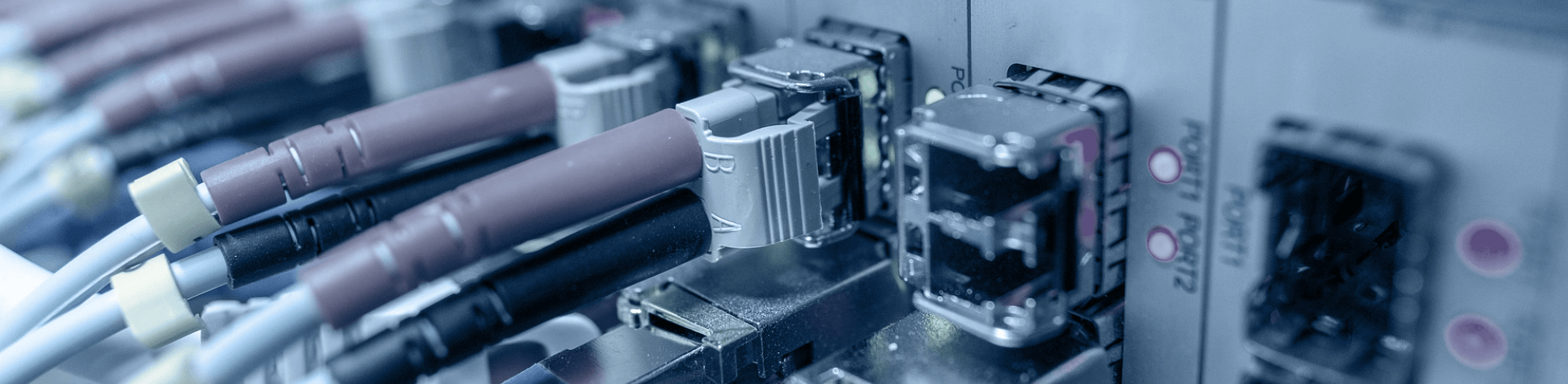
PenTeleData, has a fully redundant network that has more than 60 Points of Presence served on 10,000+ miles of fiber optics throughout Pennsylvania and New Jersey delivering Voice, Video, Data, and Internet services.
Local internet providers include: